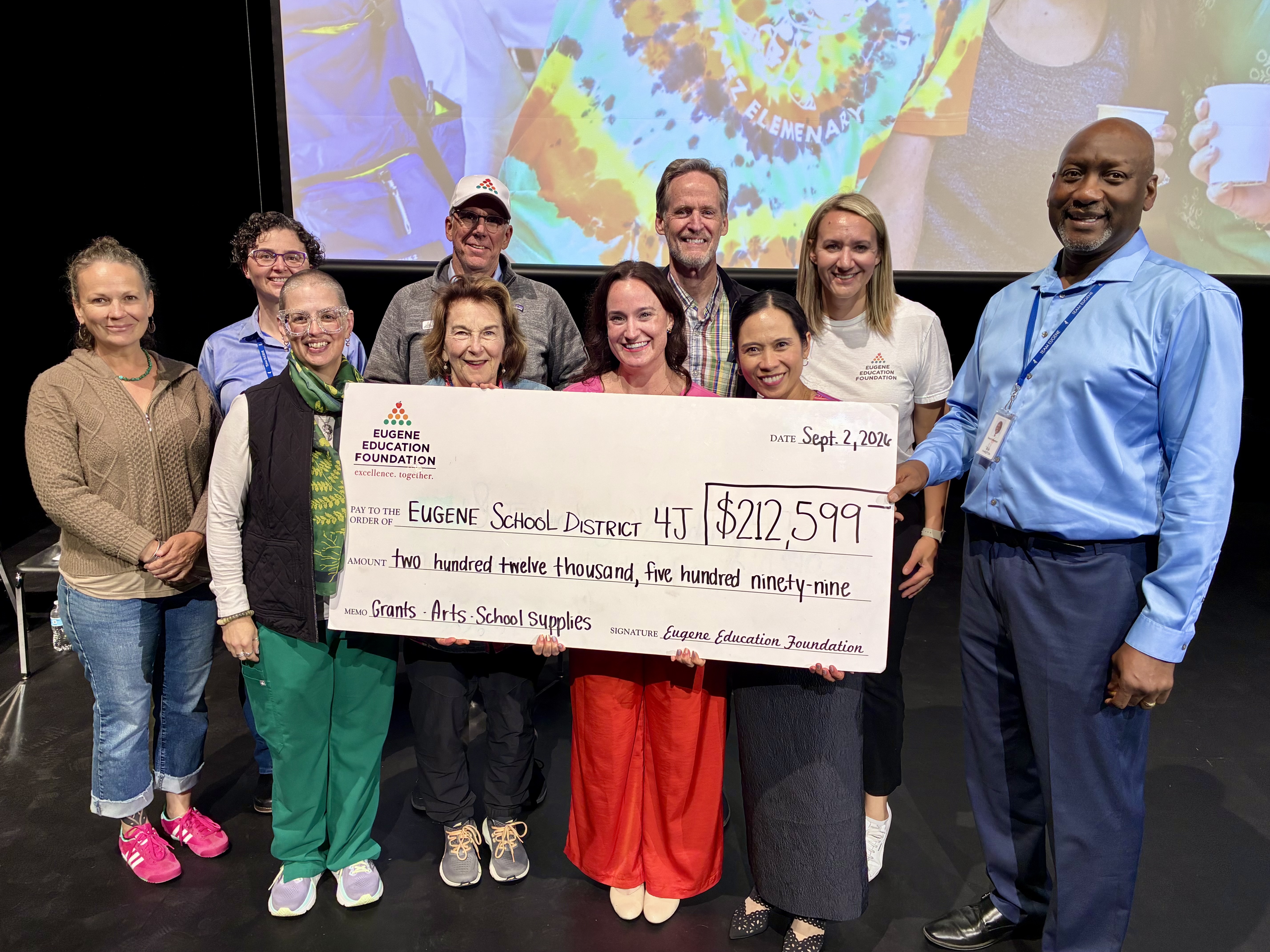
This fall, the Eugene Education Foundation awarded 51 enrichment grants totaling $169,599 to classrooms across 4J. These grants reach every grade band in the district: 45 percent went to elementary schools, 20 percent to middle schools, 18 percent to high schools, and 18 percent to district-wide programs that touch multiple schools at once.

Keeping kids fed, safe, and supported
The largest share of this year’s funding, nearly 21 percent, went toward PE and adaptive supports. That includes a $9,947 grant for Inclusion on Bikes, which builds an adaptive bike fleet and gives free refurbished bicycles to students in need, and $10,000 for All-Abilities Sports Awareness Week, which brings adapted sports like wheelchair basketball and goalball into elementary and middle school gyms.
Basic needs made up another meaningful piece of the pie. A $10,000 grant is funding clothing closets, laundry facilities, and food support systems across middle schools, giving students long-term access to essentials that make it easier to stay in class and focused on learning.
After-school programs stay open
Nearly 15 percent of this year’s grants supported after-school care, largely through EEF’s investment in the BEST program (Boosting and Enriching Students Today). Facing significant budget cuts for 2026-27, BEST sites across the district received a combined $25,000 to maintain academic intervention, arts instruction, and hands-on STEM and literacy support for hundreds of students who rely on the program every afternoon.
Literacy and libraries
Literacy programs and library refreshes accounted for over 13 percent of this year’s awards. Grants funded new nonfiction science collections, expanded Spanish-language titles, and updated fiction for schools where library budgets haven’t kept pace with a changing student body. One elementary school used its grant to replace a 27-year-old science collection and grow its representation of BIPOC, LGBTQ+, and women authors. Another is building a monthly parent book study, complete with childcare and shared meals, to bring families into their kids’ literacy development.
Arts, music, and classroom enrichment
Arts and music made up close to 11 percent of this year’s funding, and classroom enrichment another 12 percent. Highlights include transportation and tickets for more than 1,200 elementary students to attend the Eugene Symphony at the Hult Center, guitars for a new high school guitar class, and a basket-weaving workshop led by a Lane Arts Council artist that connects fourth graders to Indigenous studies through hands-on art.
Other classroom enrichment grants rebuilt a school garden with twelve raised beds for science and nutrition education, added outdoor fitness equipment to combat sedentary recess time, and funded a full day of hands-on science with the Oregon Museum of Science and Industry for nearly 460 K-5 students.
Field trips and everyday access
Field trip grants, while a smaller share of this year’s funding, removed real barriers for students. Grants covered transportation and entry fees for underserved and high-mobility students to take part in local and out-of-town trips they otherwise couldn’t afford, connecting classroom learning to real-world experience.
New this year: an artists-in-residence grant
Alongside this year’s enrichment grants, EEF is investing an additional $30,000 to fund artists-in-residence for Title 1 elementary schools. The donation will bring working artists directly into classrooms that serve our highest-need students, giving kids access to professional arts instruction that many schools can no longer fund on their own. We’re actively fundraising to grow this program to reach more schools next year. If you’d like to support it, reach out to learn how to give.
Thank you
None of this happens without the community that funds it. Thank you for making another year of grants possible for 4J students and teachers.